
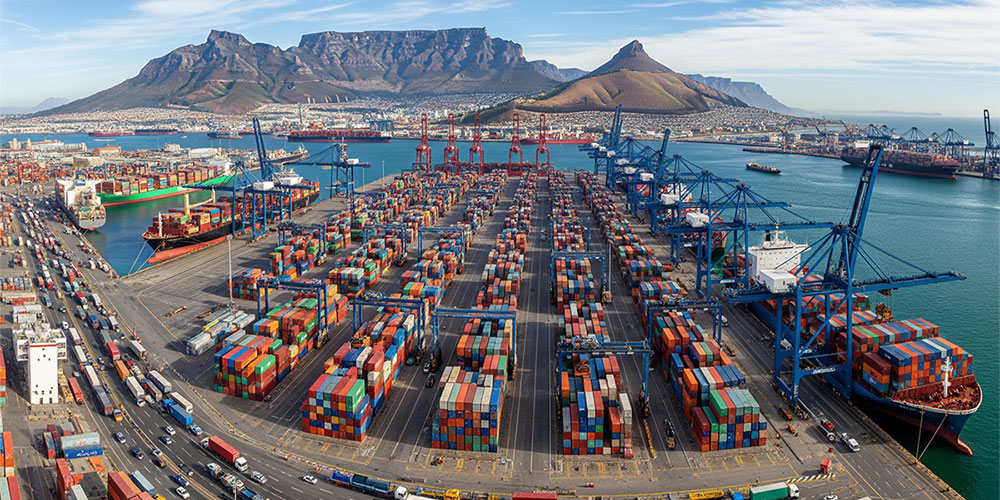
Logistics seasonal peaks have long been as predictable as the summer winds in Cape Town. Every year, importers and exporters typically schedule their calendars around the same pressure points: the back-to-school demand spike, China’s Golden Week bottlenecks, the rush before Chinese New Year, and, of course, the joyous shopping season that lights up ports, warehouses, and shopping malls from October to December.
However, 2025 is an unusual year. South African businesses must decide whether the traditional peak season will actually look like a peak season this year or if it is changing into something significantly different. This is a critical question given the unstable global geopolitical landscape, fluctuating currencies, unreliable shipping costs, and the United States.
This article breaks down the familiar seasonal cycles, overlays them with the particular risks of the modern world, and offers practical, real-world solutions. In order to help South African businesses not only survive but flourish in what appears to be yet another uncertain year, Turners Shipping actively supports several of them.
In this Blog:
- A Quick Refresher: What Exactly Are Seasonal Peaks?
- Will There Be a Peak Season in 2025?
- The Risks Importers and Exporters Must Watch in 2025
- Nine Practical Strategies for Managing Costs and Risk
- Looking Beyond 2025
A Quick Refresher: What Exactly Are Seasonal Peaks?
Every year, certain events cause sudden surges in global trade flows. For South African businesses, these moments translate into congested ports, squeezed freight capacity, and a scramble for warehousing and trucking. The major ones include:
- Chinese New Year (late January–February): With Chinese factories shutting down for weeks, importers rush to secure orders beforehand, creating a bottleneck.
- Back-to-School and Mid-Year Demand (July–August): A surge in imports of stationery, clothing, electronics, and school supplies.
- Golden Week (October): China’s week-long holiday halts production and shipping, again creating ripples across global trade lanes.
- Year-End Festive Season (October–December): The “golden quarter” with Black Friday, Christmas, and New Year sales fuelling retail stockpiles.
Exporters deal with their own cycles. For example, the summertime demand for South African citrus in Europe causes spikes in the use of reefer containers, whereas the demand for minerals headed for Asia varies according to overseas industrial output. These peaks typically result in increased freight costs, congested Durban and Cape Town terminals, and further strain on inland logistics systems.
Will There Be a Peak Season in 2025?
The short answer is yes, but expect it to be less predictable, more volatile, and potentially more expensive. The calendar hasn’t changed, but the context certainly has. Here’s why:
1. Geopolitical Tensions
Conflicts and security risks are reshaping shipping routes. The Red Sea and Suez Canal disruptions have pushed more vessels around the Cape of Good Hope. While this brings added traffic (and visibility) to South African ports, it also raises the risk of congestion, higher insurance costs, and schedule unpredictability.
2. Exchange Rate Volatility
The rand is one of the most actively traded emerging-market currencies; however, unfortunately also one of the most volatile. A weak rand inflates the cost of imports, from consumer electronics to industrial inputs, while exporters may enjoy a currency advantage but still face pricier imported fuel and machinery. The swings complicate planning for peak periods.
3. Shipping Costs
After a rollercoaster ride during the COVID-19 years, shipping costs remain stubbornly elevated. South African shippers face additional surcharges, port delays, and the cost of repositioning empty containers. When one factors in fuel surcharges and trucking rate hikes, the bill increases rapidly during high-demand periods.
4. US Economic and Policy Uncertainty
Despite International Trade Relations with other countries, the United States plays a significant and undeniable role in shaping global trade flows. Changes in tariff policy or consumer spending ripple across supply chains. For South African exporters, US demand may be highly volatile. For importers, upstream disruptions resulting from US-China tensions can derail sourcing plans.
The Risks Importers and Exporters Must Watch in 2025
South African businesses should brace for:
- Port Congestion: Durban, Cape Town and Ngqura are already prone to backlogs. Increased rerouted traffic could worsen the bottlenecks.
- Longer Lead Times: Global diversions or heightened demand could add weeks to transit schedules.
- Higher Spot Freight Rates: Capacity shortages tend to drive up spot market prices, especially for urgent consignments.
- Inventory Surprises: Misjudging demand could leave you with costly excess stock or, worse, empty shelves when customers need you most.
- Currency Shocks: A sudden swing in the rand could erode margins or inflate costs.
- Energy and Fuel Volatility: Rising bunker and diesel prices contribute to both ocean freight and inland haulage costs.
Nine Practical Strategies for Managing Costs and Risk
This is where preparation and the right logistics partner can make all the difference. At Turners Shipping, we work side-by-side with clients to anticipate risks, leverage finance tools, and secure capacity. This is how businesses can navigate 2025’s uncertainty:
1. Plan Early and be Agile
Avoid waiting until the peak arrives. Anticipate demand months in advance and factor in buffer time. Plans should be updated often to reflect changes in freight rates, exchange rates, and customer orders. Our logistics experts at Turners Shipping help clients create flexible, realistic supply chain plans.
2. Diversify Supply and Export Routes
Don’t rely too much on one port, lane, or supplier. Cape Town and Ngqura might provide viable alternatives for Durban, so it’s not always the only choice. Similarly, spreading your suppliers throughout Asia or Africa can help cushion potential shocks. Our clients can access safe routing options from almost anywhere thanks to our extensive global partner network.
3. Negotiate Freight Contracts in Advance
Peak spot rates can be brutally costly. Get contracts as soon as you can, even if they are a little higher than the going rates. The premium is justified by the predictability. Turners’ committed Freight Procurement Specialist ensures that customers receive locked-in capacity and competitive rates.
4. Hedge Against Currency Risk
Businesses are exposed to rand volatility when they import goods priced in US dollars. Options, forward coverage, and other instruments can stabilise expenses. Businesses can negotiate favourable rates when paying foreign suppliers by using our Trade Finance services and solutions.
5. Build Smart Buffer Inventory
Additional inventory protects against delays, but it may also unnecessarily tie up capital, which would negatively impact cash flow. Finding mission-critical products is crucial. Turners assists clients in finding the ideal balance between readiness and liquidity with the assistance of the Turners Trade Finance product.
6. Use Mode Flexibility
Not every product should spend six weeks at sea or belong on an aeroplane. Categorise cargo according to urgency and assign it to the appropriate mode of transportation. Our logistics teams create multimodal solutions that strike a balance between dependability, speed, and cost.
7. Strengthen Supplier Communication
Maintain open channels with suppliers. Discuss forecasts and identify potential hazards. Having good relationships with suppliers can make the difference between getting a container and missing a shipment. Additionally, by assuring suppliers that payments are dependable and prompt, Turners’ Trade Finance solutions foster long-term relationships based on trust.
8. Watch Global Trade Indicators
Cost changes are frequently predicted by changes in the price of oil, updates to tariffs, or security events. Companies that keep an eye on things and act fast do better. To stay ahead of the curve, we keep a close eye on news about international trade and share its findings with our clients through daily updates and News Bulletins.
9. Be Transparent About Costs
Costs must occasionally be passed on to the consumer. When price changes are openly discussed, customers are more understanding. Our clients can keep their customers informed and involved by using Turners Shipping’s ongoing updates on cost drivers and trade volatility.
Looking Beyond 2025
In 2025, uncertainty itself will be the only thing that is certain. Seasonal peaks will still exist, but geopolitics, the economy, and changes in global demand will distort their form. Companies that prioritise resilience through adaptability, diversification, and strategic planning will not only survive the storms but also surpass rivals who do not.
Even when international trade feels like a rollercoaster, Turners Shipping’s job is to be that proactive, nimble, and agile partner that helps clients plan more effectively, negotiate better, and move cargo more dependably.
Businesses in South Africa are Accustomed to Instability
The terrain is rarely flat, from the fluctuations in the Rand to persistent port backlogs. How you position yourself, react, and prepare to transform obstacles into opportunities is what counts.
Yes, there will most likely be a peak season for logistics in 2025. However, the level of foresight you use and the logistics partner you select will determine whether it feels like a crisis or a manageable challenge.
In addition to freight forwarding experience, having Turners Shipping on your side provides access to financing options, a worldwide network, and experts committed to maintaining the smooth flow of your supply chain. That’s thriving during peak season, not just getting by.
Gregory Marks
Business Development & Transformation Manager
Turners Shipping