
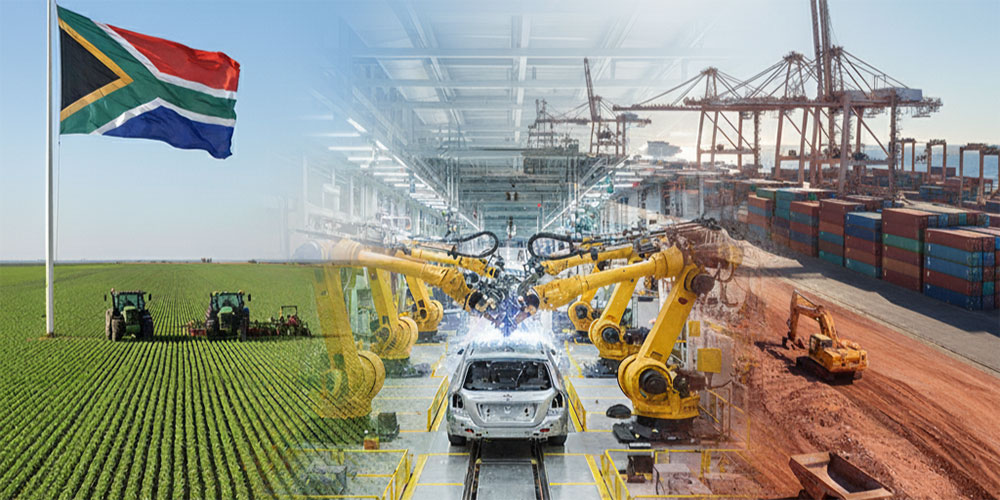
Since April 2025, and President Donald Trump’s infamous press conference, half a year has passed since the United States introduced its so-called “reciprocal tariffs”. South African exporters are coming to terms with a new commercial reality. What began as policy rhetoric quickly translated into concrete duties. In some cases, these duties have been steep. A range of South African exports to the US are impacted, and the repercussions tremor across factory floors, in vineyards and in packing sheds from the Western Cape to the Limpopo. This article describes what transpired, how it has impacted important industries, what the preliminary data indicates, and what South African companies and decision-makers can do going forward.
In this Blog:
- What the tariffs are
- The immediate winners and losers
- Trade flows since April 2025
- Real effects on people and places
- What South Africa has done
- What Exporters and Buyers are doing
- What Exporters, Policymakers and Buyers can do
- How is Turners Shipping geared
What the tariffs are (condensed)
In 2025, the US administration announced and then implemented a package of measures described as “reciprocal tariffs”. A US baseline tariff, together with country-specific higher rates for certain trading partners. One of the higher country-specific rates was assigned to South Africa. This was broadly reported at around 30% on many agricultural and consumer exports. In addition, separate US measures raised tariffs on vehicles and vehicle parts (about 25%) and on certain metals and related derivatives. Earlier this year, these measures were implemented gradually, and in August, tariffs particular to numerous nations, including South Africa, went into effect.
It would be remiss not to include the compounding effect the expired African Growth and Opportunity Act (AGOA) agreement has had on South Africa.
As of now, with the expiration of AGOA, the preferential duty-free treatment previously granted under AGOA has fallen away. Consequently, Most-Favoured-Nation (MFN) tariff rates now apply to qualifying goods. In addition, the introduced reciprocal tariff measures of 30% are also in effect.
Should AGOA be renewed retrospectively, importers may qualify for refunds of duties paid during the interim period. However, this will ultimately depend on the decision of the U.S. Congress. Current indications suggest that a retrospective renewal is possible, but this is not guaranteed.
The immediate winners and losers
Although they are often viewed as “blunt instruments”, tariffs increase the cost of imports into the US, protecting certain American manufacturers while decreasing the competitiveness of foreign suppliers. For South Africa, two short-term but significant patterns have been visible:
- Agriculture (citrus, grapes, tree fruit, wine): Severe tariffs were imposed by US authorities on a category of agricultural products in which South Africa is a significant seasonal exporter. Industry associations cautioned that the new rates, which are reportedly 30% for some categories, could significantly increase landed prices in the US and reduce the profits and market share of South African exporters. Job losses were expected to be concentrated in remote packing towns, according to early comments from producers and trade associations.
- Automotive and Parts: South Africa exports automobiles and auto components to the United States and other countries in the region. Some South African-made automobiles and parts are significantly less price-competitive in the US than they were six months ago due to the separate 25% tax on vehicles and a comparable measure on parts. This is important as cars and parts are higher-value items, and supplier contracts depend on margins and volume.
However, demand has remained strong this year for those exporters who sell speciality or in-season goods (seasonal harvests, contract fulfilment, and short-term inventory changes can disguise longer-term reductions). Strong harvests, for instance, continued to underpin an increase in agriculture exports to the US in Q2 2025, but analysts warned that the tariff cloud makes future development questionable.
Trade flows since April 2025
The picture is mixed and, like badly prepared breakfast oats, a little lumpy and difficult to digest. South Africa’s exports to the US did not instantly collapse once tariffs were announced. Existing contracts, shipping times and seasonal trade distort the immediate effect. However, the signals are telling:
- South Africa was classified as a high-tariff partner, and in August, country-specific reciprocal rates were put into effect, according to official US trade data and independent trade trackers. This implies that coming ahead, export orders negotiated after that date will be subject to the increased fees.
- Agricultural export values in Q2 2025 rose year-on-year (a function of harvest size and pre-existing contracts), but trade press and grower bodies have warned the tariffs will act as a drag on future seasons because American buyers will either source closer (or tariff-free) alternatives, reduce volumes, or demand lower Free-On-Board (FOB) prices.
Put simply, short-term shipments kept moving, but the tariff makes new business harder to win and long-term contracts risk being renegotiated or lost.
Real effects on people and places
Some of the most visible impacts are happening where exports are labour-intensive and seasonal:
- Citrus towns and packing houses: According to some estimates, a large decline in shipments to the US might jeopardise up to 35,000 jobs in the citrus value chain. Particularly at risk are rural communities that rely on packing and seasonal labour. These are real jobs; pickers, packers, cold-store operators, logistics and transport contractors. These are not abstract figures, and a sudden downgrade in demand can ripple through the local economy quickly.
- Wine and Fruit exporters: These industries depend on steady market access and run on narrow profit margins. South African goods are less competitive with suppliers from nations that still have duty-free access or reduced tariffs because of the tariffs, which raise landed costs in the US.
- Manufacturing and Auto Suppliers: Tariffs on vehicles and parts increase the effective cost of South African goods in the US market. A change in US demand might result in lower orders and underutilisation of capacity in domestic plants that supply export contracts for manufacturers who are part of global value chains.
What South Africa (and South African exporters) have said and done
South Africa’s government and industry bodies have reacted on several fronts:
- Diplomacy and appeals: Since many trading nations contend that certain taxes are disproportionate or jeopardise existing trade agreements and seasonal complementarities (such as South African citrus supplying the US off-season), officials sought clarity and engaged in negotiations. Bilateral and multilateral involvement has since intensified.
- Diversification: Ministers and exporters are emphasising faster market diversification. Selling more to Asia, the EU, the Middle East and intra-African markets to reduce bilateral exposure to the US. Diversification. While a sensible approach, it takes time and investment (new buyers, certifications, logistics).
- Domestic mitigation measures: There have been calls for government-backed support for affected growers (credit, wage support, market development assistance) and for fast-tracked bilateral talks to seek exemptions or phased arrangements for seasonal products. Some trade bodies are pursuing legal and diplomatic channels simultaneously.
How exporters and buyers are already adjusting
Businesses are practical and adaptive; here are common responses:
- Renegotiating contracts and prices: Due to decreased margins, exporters are looking at either lowering input costs upstream or price increases downstream (which can be challenging when consumers switch suppliers). To maintain their market presence, some are absorbing reduced margins for one season.
- Targeted product shifts: Firms are prioritising product lines that are less price-sensitive (premium wine segments, branded goods) and pulling back on commodity lines that compete primarily on price.
- Logistics and route changes: Where US demand softens, exporters are diverting shipments to other markets or increasing domestic processing (value-addition at home) to move goods into different trade channels.
- Hedging and inventory adjustments: Inventory policies are also being altered by buyers and sellers. US importers may eventually run out of South African goods and switch to those from countries with no tariffs. Even if there is still consumer demand in the US, this behaviour lowers immediate supplies from South Africa.
The bigger economic picture
Tariffs are one of several macroeconomic factors. Exchange rates, local manufacturing costs, and worldwide demand conditions are all significant. Some analysts pointed out that the US trade deficit remained significant overall and that US imports did not plummet in total despite higher US tariffs more generally. This indicates that while tariffs may be required, as put forward by the Trump administration, they are ineffective in altering international trade flows. For South Africa, this detail is crucial. Whether US buyers change suppliers permanently or just make short-term adjustments while costs fluctuate will determine the long-term harm.
Practical next steps for Exporters, Policymakers and Buyers
If you’re an exporter, a buyer or a policymaker reading this, here are practical actions that make sense now:
- Exporters
- Re-price and re-negotiate smartly: clearly model landed costs and leverage INCO™ Terms into offers and consider absorbing part of the tariff for key strategic buyers, but only where you can afford to do so.
- Diversify markets and customers: accelerate entry into alternative markets already showing demand growth (EU, Middle East, regional African markets).
- Move up the value chain: invest in packaging, branding and certification so products compete on quality rather than price alone.
- Policymakers
- Pursue accelerated bilateral talks and seek temporary exemptions or carve-outs for seasonal/strategic lines where possible.
- Provide targeted support (credit lines, wage support, retraining) for communities most at risk in the short term.
- Redouble market development assistance so exporters can pivot rapidly.
- US importers
- Consider long-term supplier diversification and balanced sourcing strategies; short-term savings from cheaper suppliers may be outweighed by supply-chain reliability and quality issues. Quality and reliability are important. Compromising on these may end up compromising or even damaging your brand.
- Where South African goods are complementary (seasonal fruit that fills off-season gaps), work with suppliers and governments to seek exemptions or phased arrangements.
Being prudent does not mean cutting corners; it is often more prudent to practice caution in selecting a business partner, like a freight forwarder, who truly appreciates the challenges and can help you navigate what could be treacherous waters.
In a Nutshell
South African exports have not abruptly collapsed six months after the US imposed retaliatory tariffs. The competitive calculus has changed, but trade flows take longer to shift due to existing contracts and seasonality. The industries most immediately impacted are those that export agricultural products and produce automobiles and auto parts. In addition to raising costs in the US, tariffs also jeopardise jobs, orders, and market share. In response, governments and businesses are implementing mitigation, diversification, and diplomacy strategies, but these are not quick remedies.
The upcoming year will be telling, instructive and illuminating. South Africa will require more profound structural answers (investing in new markets, moving up the value chain, and targeted social support) if US buyers make permanent adjustments. The harm might be limited if the tariffs are short-term or sector-specific. Either way, exporters should act as if the world has become less predictable because, plainly, it has.
How is Turners Shipping geared?
When you read our previous blogs, you will soon realise that with our nearly 130 years of legacy and institutional experience, we have seen it all and have been building capacity to safeguard our clients. We have a wide range, bespoke and tailored products and services to support our clients in this “new normal”. To mention a few:
- Freight Procurement Specialists who negotiate the most competitive freight rates.
- Dedicated Supply Chain and Logistics Specialists who can rapidly respond and pivot to the most favourable routing options.
- INCO Term Specialists who can guide exporters to curate their supply contracts favourably.
- Trade Finance helps clients strike the right balance between preparedness and liquidity.
Even if the future is unknown, it need not be that bleak with Turners Shipping at your side.
You have invested in expanding your export market; now, when it counts, let us assist you in maintaining your market access with innovative solutions. Turners Shipping is renowned for being that reliable, trustworthy and dependable partner, especially when times may feel uncertain.
Gregory Marks
Business Development & Transformation Manager
Turners Shipping