

When industry heavyweights gathered in Cape Town in January, most agreed it was time for an overview of the state of Africa’s bunkering and maritime industries and, crucially, what needs to change if the continent is to convert aspirations into sustained competitiveness.
The occasion was the Maritime Week Africa 2026 (MWAF26) conference, which brought together tax specialists, regulators, port officials, fuel suppliers, shipowners, and logistics experts from across Africa and beyond.
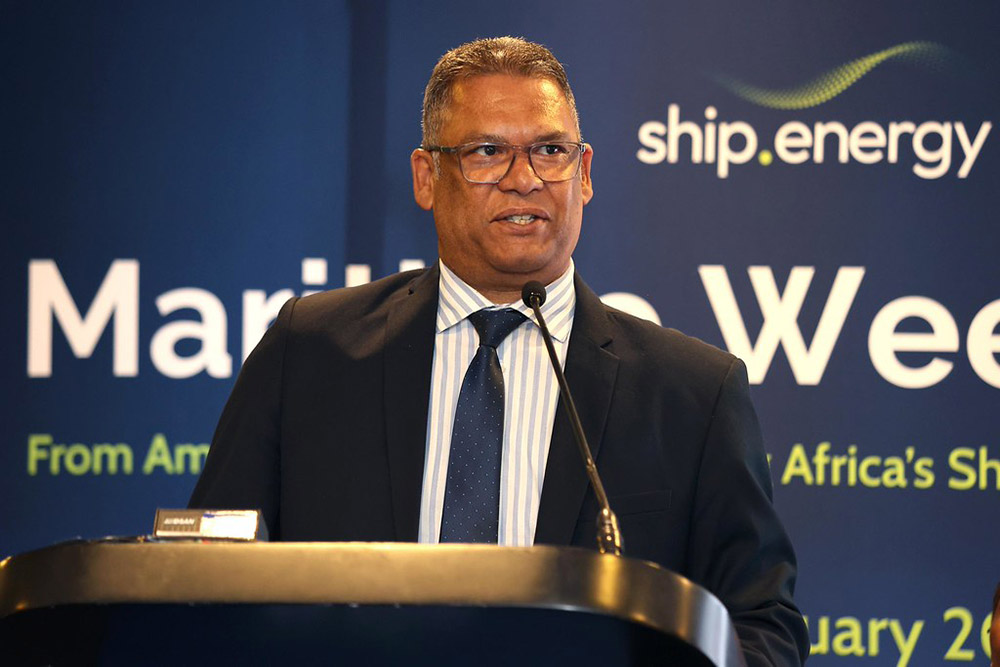
“This conference is different in that it has developed into a platform where operational experience, business reality, and policy collide to collaborate,” says Gregory Marks, Transformation and Development Manager at Turners Shipping, and one of the presenters at the event.
From Ambition to Action: A Sector at the Crossroads
The topic of the conference, ‘From Ambition to Action: Energising Africa’s Shipping and Bunkering Sectors’ was well chosen, said Marks, as was evident from panel discussions and casual conversations.
“Everyone agrees that Africa’s marine industry is at a turning point. Fuel markets are changing due to the energy transition, while changing trade corridors are pushing up demand for bunkering services,” he explained.
“However, Africa’s capacity to compete with well-established global bunkering hubs is still hampered by regulatory ambiguity, infrastructure limitations, and uneven policy implementation.”
What distinguished this year’s conference was the shift away from abstract ambition towards practical questions like:
- How policy choices affect investment decisions,
- How tax frameworks influence bunker pricing, and
- How regulatory clarity can either enable or suppress offshore bunkering activity.
Cape Town’s Strategic Significance
The geographical location of the conference’s host city makes it one of South Africa’s most strategically located maritime assets. Since the early days of maritime trade, Cape Town has been a crucial stopover on the east-west and north-south trade routes.
“One would expect this to give South Africa a head start, along with our infrastructure, skills base, and access to international trade lanes, but this advantage is easily compromised by policy misalignment,” warns Marks.
“Experts in the bunkering industry were quick to remind delegates that geography alone does not create a bunkering hub. Regulatory certainty, fiscal coherence and operational efficiency do.”
Regulation in the Spotlight: Bunkering Tax and Competitiveness
Tax policy and bunkering regulation were two of the most important topics of discussion at MWAF26. South Africa’s competitive position in not helped by legislation that is ambiguous and inconsistent
In his presentation, Gregory Marks addressed the complexities surrounding the South African Revenue Service (SARS) policy, fuel classification, offshore bunkering activity and the broader restructuring of the local bunker market.
His contribution resonated as it highlighted the reality many operators experience daily. “Regulatory ambiguity does not merely increase compliance risk for operators; it has a direct impact on pricing, investment appetite and operational viability.”
Despite South Africa’s physical infrastructure and maritime capacity, it is missing opportunities as some market players are hesitant to commit to our services due to varying interpretations of tax and customs regulations.
“Uncertainty over fuel imports, storage, ship-to-ship transfers and offshore operations creates complexity in a market where foreign shipowners need clarity and consistency.”
“The truth is – bunkering competitiveness is shaped as much by fuel availability as by fiscal policy. Tax frameworks that are clear, stable, and consistently applied are essential for investment and growth,” Marks concluded.
Bridging Policy and Practice
Beyond the bunkering tax, MWAF26 placed strong emphasis on aligning regulatory intent with operational reality.
Panels including representatives from the Department of Transport, Transnet National Ports Authority, the South African Maritime Safety Authority (SAMSA) and Tax Specialists, among them Gregory Marks.
“It was unfortunate that SARS was not present to offer an opportunity for direct engagement between policymakers, players in the bunkering value chain and industry practitioners,” said Marks.
A recurring theme among the panel members was the necessity for regulation that changes aligned with market realities.
“Energy transition targets, decarbonisation pathways, and geopolitical pressures are driving change in maritime trade faster than many regulatory frameworks were intended to handle. In this context, a theoretically sound but practically unworkable strategy runs the danger of stimulating activity elsewhere.”
Consensus was in favour of regulatory clarity rather than being against regulation. Industry participants stressed that ambiguity encourages caution or divestiture, while predictable laws facilitate investment.
Marks emphasised the need for industry players throughout the bunker supply and value chains to collectively engage SARS to achieve the desired state of policy certainty that supports sustainable economic development.
The Value of Connection Beyond the Panel Sessions
As with previous conferences, Maritime Week Africa’s value extended well beyond the formal agenda. Networking lunches, evening receptions and harbour engagements created the space for candid, off-the-record discussions, which were often where the most meaningful insights emerged.
For newer entrants, the Liquid Cargo Business and Vessel Chartering course provided essential grounding in the commercial mechanics of fuel movement and charter economics. It reminded seasoned professionals that when markets get more complicated, fundamentals become even more important.
What MWAF26 Signals for Africa’s Maritime Future
As Maritime Week Africa 2026 concluded, one message stood out: Africa’s maritime and bunkering sectors are ready to grow, but growth will not occur by default. It will be shaped by the quality of regulatory decisions made now.
For Marks and other panellists, the significance of viewing tax and customs frameworks as strategic tools rather than administrative afterthoughts is essential.
“Investment follows when commercial realities are supported by policy. Opportunity moves elsewhere when it doesn’t,” he stated.
Value of Dialogue
MWAF26 did not offer easy answers, but it did reinforce the value of dialogue between industry and government. In a sector defined by long investment horizons and international competition, that dialogue may prove to be Africa’s most valuable asset.
Throughout 2026 and beyond, the discussions that started in Cape Town in January will continue in ports, boardrooms, and regulatory offices. Africa, and South Africa’s role in the future of international shipping will depend on whether they result in significant change.